

Islington forecasts a £2.2m overspend, with 29 children in residential care against a budget for 18. The same papers seek a legal settlement kept secret.
Islington Council is forecasting a £2.218m overspend for 2026/27, three months into the financial year. The single biggest driver is the cost of placing children in residential care.
The figure is in the Quarter 1 Financial Risk Monitor, published on 9 September and going to the council’s Executive on Thursday 17 September. The same report asks councillors to authorise a legal settlement whose terms are being withheld from the public.
The council went into this year in better shape than the headline suggests. The report says Islington ended 2025/26 with an overall underspend, which strengthened its reserves. Every pressure in this report has emerged since April.
Where the money is going
Four directorates are forecasting a balanced position, as is the Housing Revenue Account. Three are not:
- Children and Young People, +£2.975m on a net budget of £82.387m, a 3.6% variance
- Community Wealth Building, +£0.700m, from savings that have not arrived on time
- Homes and Neighbourhoods, +£0.279m, from bad debt in temporary accommodation
Against that sits an underspend of £1.736m on corporate items, mostly a £1.4m fall in capital financing costs after the council sold assets. The net effect is a forecast General Fund overspend of £2.218m.
Twenty-nine children, a budget for eighteen
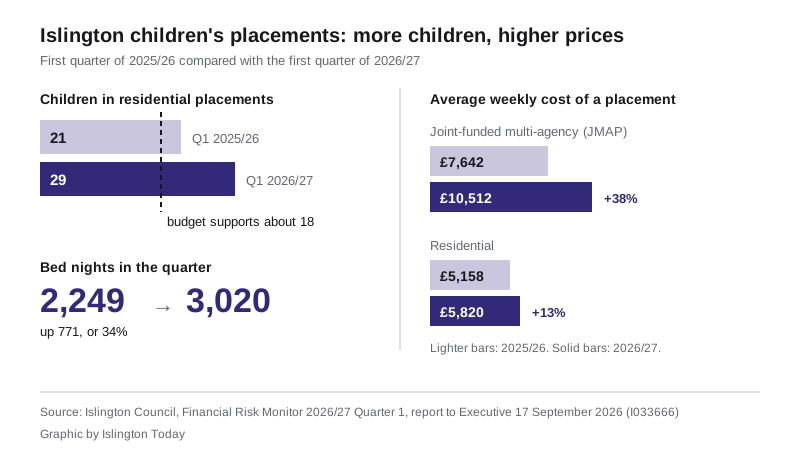
The children’s figure is the one that matters, and the report is blunt about why. The residential budget “is expected to support approximately 18 young people however there are currently 29 children in residential placements”.
Numbers and unit costs are both rising. The report compares the first quarter of this year with the first quarter of last:
| Measure | Q1 2025/26 | Q1 2026/27 | Change |
|---|---|---|---|
| Children in residential placements | 21 | 29 | +8, +38% |
| Children in joint-funded multi-agency placements | 10 | 12 | +2, +20% |
| Bed nights | 2,249 | 3,020 | +771, +34% |
The weekly price has moved further than the numbers. A joint-funded multi-agency placement, known as a JMAP, cost an average of £7,642 a week in 2025/26. This year it is £10,512, a rise of £2,870 or 38%. A standard residential placement has gone from £5,158 to £5,820 a week, up 13%.
The overall number of children looked after has stayed roughly stable. What has changed is the mix, with more of them in high-cost residential settings. The report attributes that to “increased complexity of need and continuing market sufficiency pressures”, and notes that extra staffing and specialist support is often commissioned on top of the placement itself.
The report sets out five management actions in response:
- a monthly review of every residential placement
- planned step-downs for children identified as able to leave residential care
- a challenge to every “placement extra” that has been added on top
- stronger approval arrangements for high-cost placements
- more use of the council’s own in-house fostering
Underspends in fostering and supported accommodation are expected to absorb part of the pressure. The report still calls this “the Council’s most significant financial risk”.
The other three pressures
Delayed savings. Community Wealth Building is £0.700m adrift because the FutureWork savings have not landed on schedule. Full delivery is still expected by 2027/28, through an asset rationalisation programme with a decision due at the Executive in October 2026, and by letting the council’s remaining empty office space.
Temporary accommodation. The £0.279m in Homes and Neighbourhoods is not the cost of the accommodation itself, which is being covered by demographic growth funding. It is bad debt and historic rent arrears, which the report expects to grow as caseloads do. A three-month pilot with a dedicated rent collection team brought in £250,000 of extra income and avoided £200,000 of potential arrears.
The pay award. Corporate items carry a forecast overspend of £0.964m because the pending national pay award is expected to come in above what the council budgeted. Negotiations are still running. Any excess would come out of the general contingency.
The settlement nobody can see
Buried in the recommendations is a second decision. The Executive is asked to “authorise a settlement agreement, as set out in Exempt Appendix 1”. It would then delegate the final terms to the Corporate Director of Health and Social Care. The Section 151 officer and the Executive Member for Finance would be consulted first.
The appendix is not published. The report gives the reason: it contains information covered by legal professional privilege, exempt under Paragraph 5, Schedule 12A of the Local Government Act 1972.
Its likely size can be read off the reason it is on the agenda at all. The report says Part 3 of the council’s constitution requires the Executive to authorise the settlement of any legal proceedings involving a payment of £500,000 or more, and cites that rule as why the decision sits with councillors.
What it means for you
Nothing on your bill changes this year. A council forecast at Q1 is a warning light, not a decision, and there are nine months left to close the gap. Band D council tax in Islington is £2,107.87 in 2026/27, already set. The council’s own share went to the 4.99% referendum limit when the budget was agreed in the spring.
What it does tell you is where the squeeze will be felt if the gap does not close. The report says that if children’s pressures continue, more of the corporately held demographic growth funding will be moved across to cover them. That money is the council’s buffer for rising demand everywhere else.
The report is on the Executive agenda for 5pm on Thursday 17 September in the Council Chamber at the Town Hall on Upper Street, and is webcast. Two days earlier, the Children and Young People Scrutiny Committee meets. It takes a separate report on lifelong corporate parenting on housing, mental health and employment support for the same young people once they leave care.
Sources
- Financial Risk Monitor 2026/27, Quarter 1, report to Executive 17 September 2026 (Islington Council, report no. I033666)
- Executive agenda, 17 September 2026 (Islington Council)
- Lifelong Corporate Parenting, report to Children and Young People Scrutiny Committee 15 September 2026 (Islington Council)
Have your say