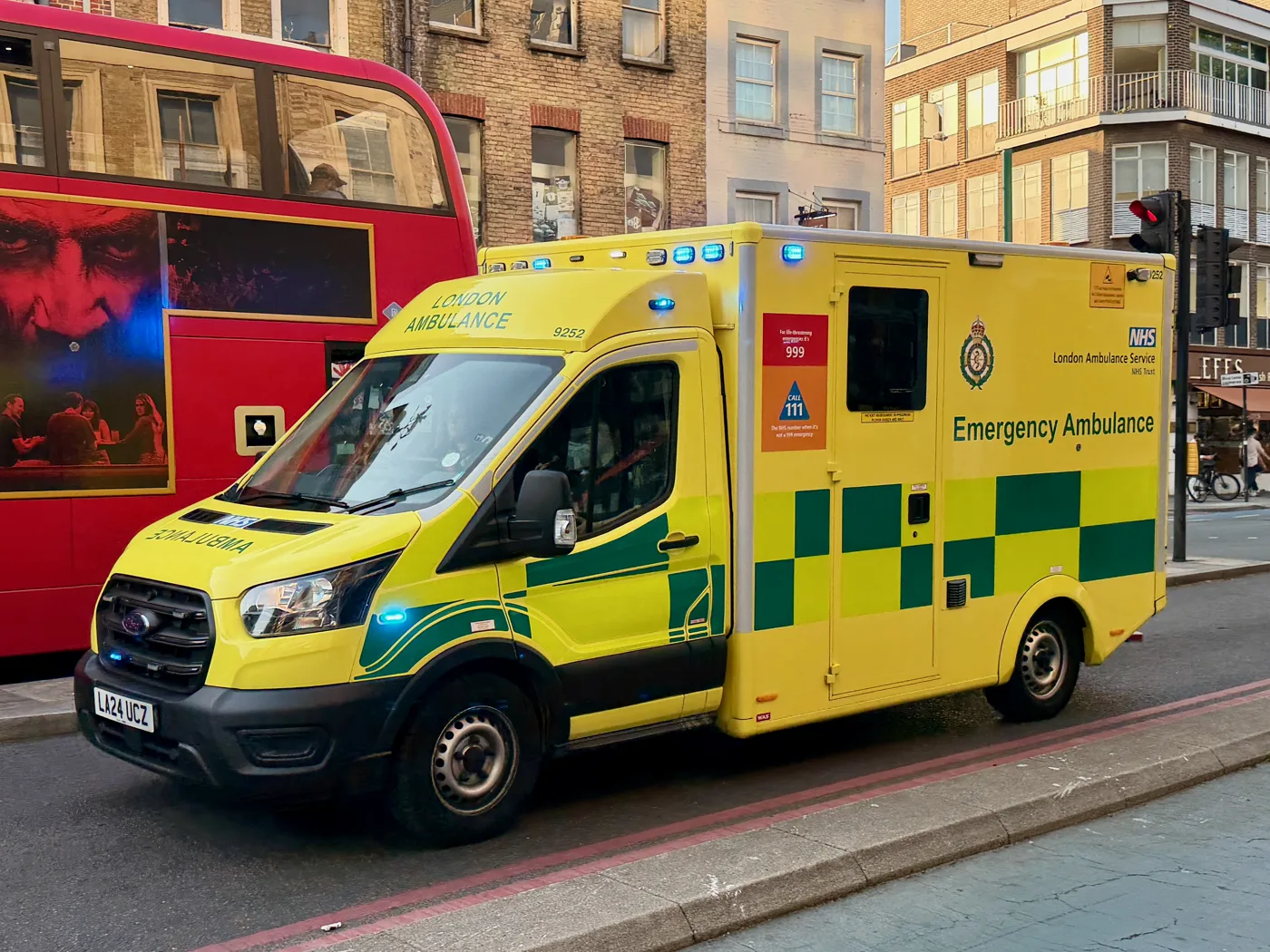

Ambulances took an average 32 minutes 15 seconds to reach Category 2 calls in Islington this year, over the 30-minute target. Cardiac arrest calls met theirs.
Ambulances in Islington took an average of 32 minutes 15 seconds to reach Category 2 calls between January and September 2026. That is longer than the 30-minute target, and slower than the London average of 30 minutes 40 seconds. Category 2 covers emergencies such as strokes and chest pain.
The figures come from the London Ambulance Service’s annual report to Islington councillors. The council’s Health, Wellbeing and Adult Social Care Scrutiny Committee discusses it on Wednesday 18 November.
For the most serious calls, the borough did better than London. Category 1 calls, such as cardiac arrests, were reached in an average of 6 minutes 31 seconds. The target is 7 minutes and the London average was 6 minutes 59 seconds.
The figures in full
Average response times, January to September 2026:
| Type of call | Islington | London | Target |
|---|---|---|---|
| Category 1 (life-threatening) | 6m 31s | 6m 59s | 7 minutes |
| Category 2 (emergency) | 32m 15s | 30m 40s | 30 minutes |
| Category 3 (urgent) | 1h 36m 39s | 1h 30m 59s | 2 hours |
| Category 4 (less urgent) | 2h 49m 21s | 2h 33m 12s | 3 hours |
Islington was slower than the London average in three of the four categories. The four categories are defined by NHS England in its ambulance quality indicators.
October was slower
The report also gives figures for October 2026 alone:
| Type of call | Islington | London | Target |
|---|---|---|---|
| Category 1 | 7m 12s | 7m 17s | 7 minutes |
| Category 2 | 33m 43s | 31m 57s | 30 minutes |
| Category 3 | 1h 59m 31s | 1h 36m 37s | 2 hours |
| Category 4 | 2h 33m 28s | 2h 37m 47s | 3 hours |
In October, the Category 1 average in Islington went 12 seconds over the 7-minute target. Urgent Category 3 calls took nearly 23 minutes longer than the London average, finishing 29 seconds inside the 2-hour target.
What the service says it is doing locally
The report does not explain why Islington is slower. It lists local work, including:
- reviewing with the council how pedestrianisation and traffic-reduction schemes affect emergency response
- joint visits with the council to a housing estate to check signs and access to homes
- more use of same-day emergency care at the Whittington Hospital, so some patients are treated and sent home without going through A&E
- mental health ambulances, which the service says are among the busiest in London in Islington
It warns that winter 2026/27 is likely to bring “sustained pressure”. Its winter plan aims to cut hospital handover delays and treat more callers by phone or at the scene.
The service has also launched a 999 patient survey. Patients can give feedback at londonambulance.nhs.uk/shareyourfeedback.
What it means for you
In a life-threatening emergency, Islington’s ambulances are still arriving inside the 7-minute target on average across the year. For a suspected stroke or chest pain, the average wait this year has been just over half an hour, a little longer than elsewhere in London.
These are averages, so some patients wait longer than these figures. Always call 999 straight away for chest pain, stroke symptoms or someone who is not breathing. For anything less urgent, NHS 111 can direct you to the right service.
The committee meets at 7.30pm on 18 November. The agenda and papers are on the council’s committee site.
Have your say