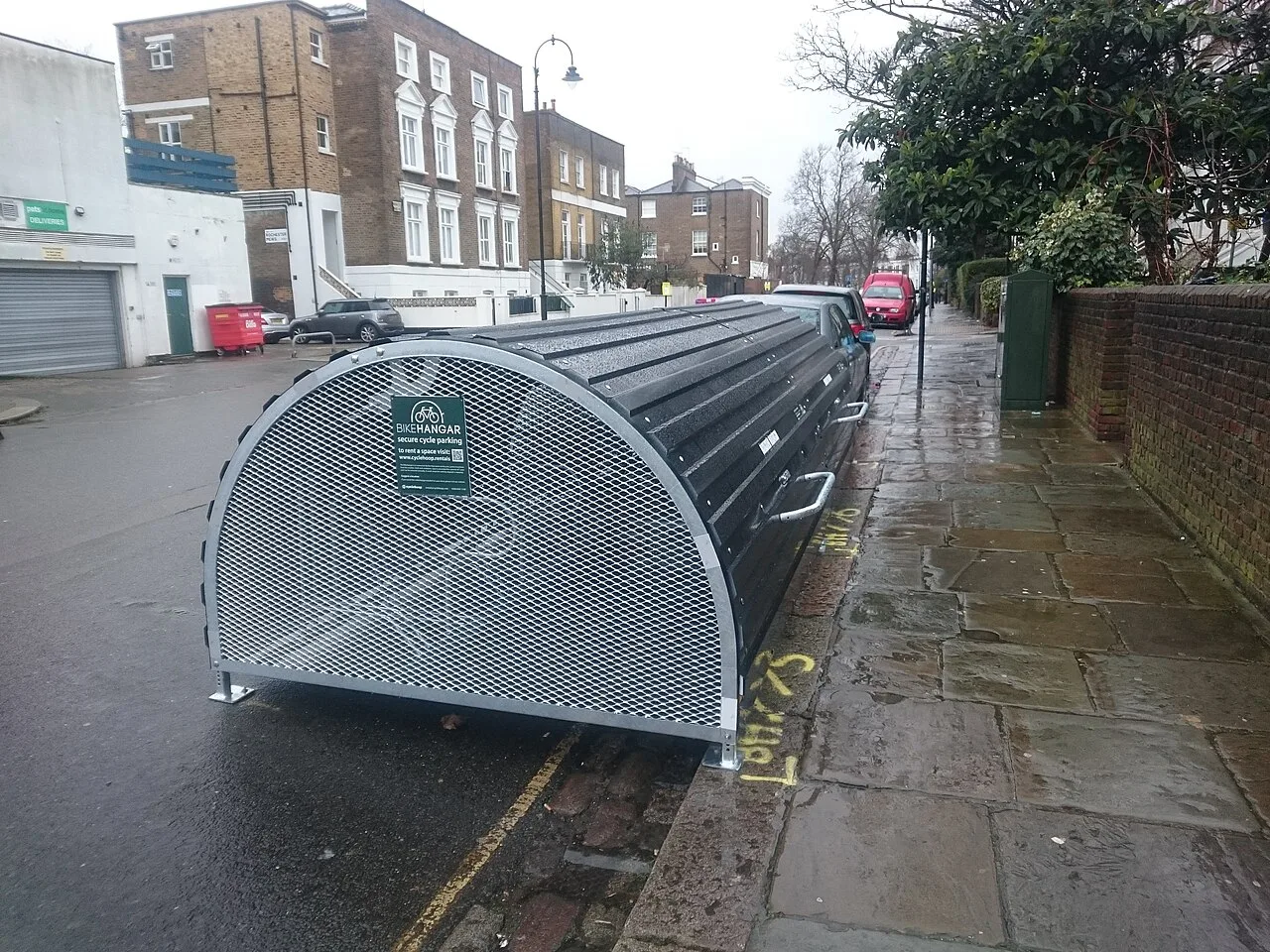

Islington plans up to 691 new bike hangars by 2033 under a £3.3m contract. Spaces cost £107.25 a year, and the first 132 are due in 2026/27.
Islington Council has approved a plan to buy up to 691 new bike hangars over the next seven years. It will tender a single contract worth up to £3,269,274 to supply, install and repair them.
The Director of Public Realm, Climate Change and Transport took the decision on 24 September. It is published as key decision 1032910 and the council’s decision record shows it took effect on 30 September, with no call-in recorded.
Updated 2 October: the call-in window closed on 29 September without a call-in, so the procurement can now go ahead.
What the borough has now
The officer report gives the current count as of May 2026:
- 657 on-street bike hangars, holding 3,942 bikes
- 349 secure cycle stores on council estates, 186 of them hangars, with more than 1,000 spaces between them
That works out at six bikes to each on-street hangar. The council has run the installation and rental of hangars itself since 2017.
What the new contract would add
The report sets out an estimate, year by year, based on prices from the last hangar order. It assumes 132 hangars in the first year, tapering to 83 by 2032/33 as the waiting list shrinks.
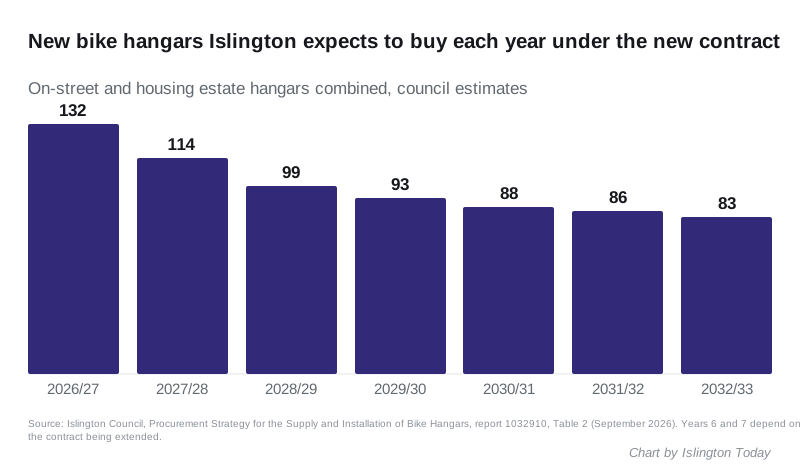
Across the seven years that is:
- 598 on-street hangars for £2,844,275, paid for from the Cycle Parking Schemes capital budget, which is funded by borrowing
- 93 estate hangars for £425,000, paid for by Housing. Only £123,000 of that is confirmed: £96,000 from the Thriving Neighbourhoods programme and £27,000 from developer contributions (Section 106 and the Community Infrastructure Levy). The report expects a further £210,500 from developer contributions, but says that money is not yet allocated
At six bikes a hangar, 598 on-street units would add roughly 3,600 spaces. The report does not give a figure for spaces itself.
The contract lets the council order up to 100 on-street and 30 estate hangars a year. It guarantees the supplier no minimum, so the council can slow down if demand or funding falls away.
Why the council is changing how it buys them
Until now Islington has bought hangars through short-term deals. The report names two: the Waltham Forest framework, which expired in 2023, and an NHS framework used for “urgent delivery” in 2025. It says those arrangements were “resource-intensive, less cost-effective” and made it hard to plan ahead.
The report gives two start dates. Its summary says 1 December 2026, but its own procurement timetable signs the contract on 1 February 2027. Either way the initial term is five years, and two one-year extensions are possible, but only if the supplier performs. It will be advertised as an open tender on the London Tenders Portal.
A market test in February drew five responses from suppliers. Four said they could meet Islington’s maximum volumes.
What it means for you
- The price is not changing in this decision. An on-street space costs £107.25 a year. The report says that rent covers the running costs, including repairs, cleaning and the small team that manages subscriptions.
- Estate hangars stay free. Housing does not charge for them, because the developer money that pays for them cannot be used to raise income.
- New sites follow the waiting list. On-street hangars go where waiting-list demand is highest, and where there is no hangar within 50 metres. Estate hangars also follow fire safety reports, because post-Grenfell rules stop residents keeping bikes in shared hallways.
- Neighbours get a say. Each new on-street site goes to ward councillors first, then to public consultation. A traffic order is advertised in the Islington Tribune and the London Gazette before a hangar goes in.
Not every space is in use. The report puts average occupancy at about 70% on the street and 61% on estates. It says much of that gap is residents coming and going, and new hangars sitting part-empty while spaces are offered out.
The report does not say how long the waiting list is, and the council has not published a current figure.
A hangar takes up part of a parking bay. For how residents’ permits and bays work, see our guide to parking in Islington. For works on the road this week, see Islington roadworks and travel.
Have your say